ON THE ROUTE
One van, one tech, five machines.
Tap a machine to open its category — symptoms, codes and the all-in from-price.
F3-E2 means a sensor circuit. A clicking igniter means a fouled electrode. We translate, then quote the whole fix in one line.
Tap a machine to open its category — symptoms, codes and the all-in from-price.
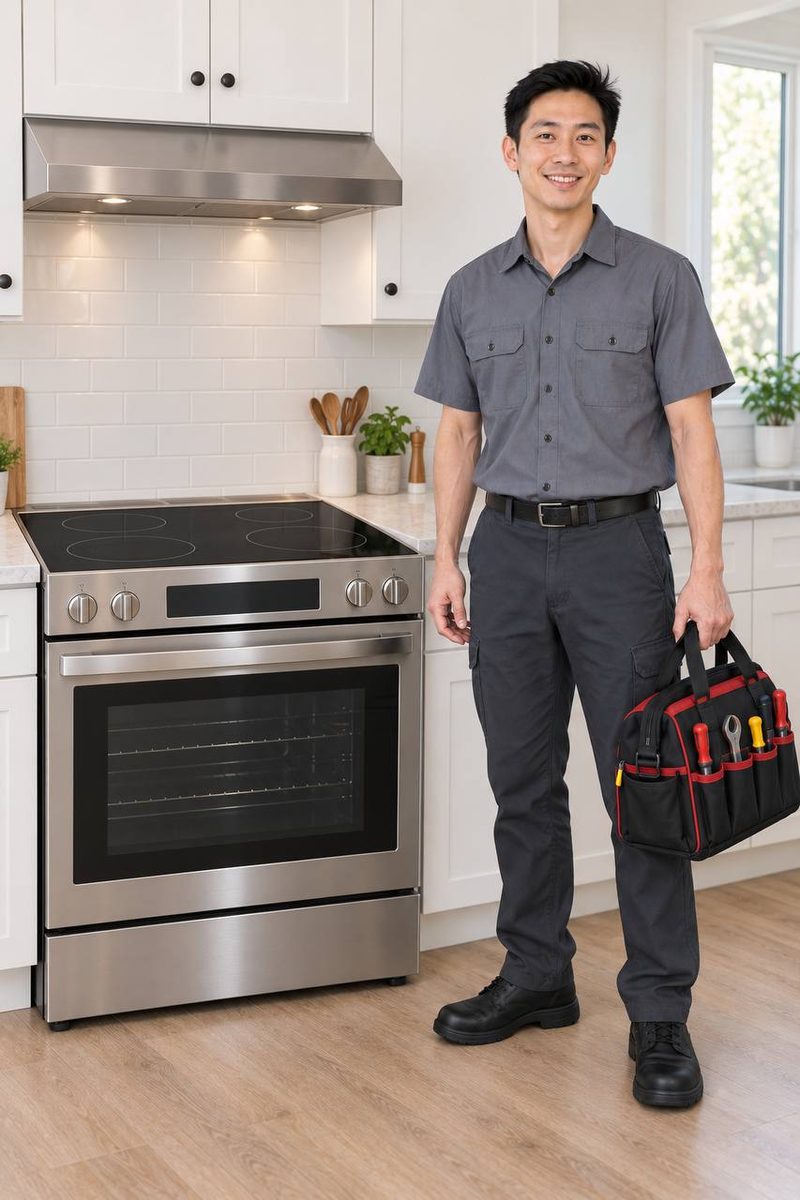
Cooking appliances fail with unusual honesty: an F-code names a circuit, a glowing-but-weak igniter names itself, a one-sided batch of cookies names a heat-distribution problem. The skill is refusing shortcuts — testing the named circuit instead of shotgunning parts — and that discipline is what an all-in price is built on.
Gas and electric ranges, wall ovens, cooktops, slide-ins — the full cooking lineup is in scope, Tri-Cities-wide. Bake elements, igniters, sensors, infinite switches and spark modules ride on the van; control boards get quoted only after testing leaves them as the last suspect standing.
Gas oven igniters rarely die suddenly — they weaken, glowing without pulling enough current to open the gas valve fully. Preheats stretch, bakes run cold, and one holiday morning nothing happens at all. We measure igniter current against spec, which catches the fade months early, and every gas-side job ends with a leak-check before panels close. If you've smelled gas at startup lately, say so — it moves your booking up.
A dead bake element usually shows its scar — a blister, a burned gap. But element symptoms with a healthy element mean the receptacle or internal wiring let go, and swapping elements forever won't fix a scorched terminal. We test the whole chain, replace heat-damaged connectors while the panel is open, and profile the oven with an independent thermometer before calling the job done.
An oven that runs 25 degrees off against a reference thermometer has either a drifted sensor or a control that needs its offset adjusted. The sensor is a measured, modest repair; the offset is a settings menu most owners never learn exists. When calibration is the whole story, we adjust it, show you how, and the visit prices as a diagnostic — not everything needs to become a parts job.
Self-clean cycles push ovens past their daily limits, and the casualties queue up afterward: thermal fuses, door-lock motors, occasionally boards. An oven that quit within a day of a clean cycle hands us the route already drawn — and the door comes open without pry-bar archaeology; there's a release sequence for every major lock design. Our standing advice: skip self-clean the week before a holiday you're cooking for.
Form or phone — the code on the display, or just what the machine is doing.
A weekday window, van loaded for your model's usual suspects.
Diagnostic, labor and parts in a single number before work starts.
Most jobs close the same visit, and the warranty is in writing.
Usually one — the circuits diverge after the control, so a single failed component explains it. Burners running while the oven sits cold actually narrows the suspect list nicely: element, igniter or sensor rather than anything supply-side. It's a normal all-in job, quoted in writing before work.
The from-price for the category is the same; where a specific job lands inside the range depends on the part, not the fuel. Gas work carries an extra safety step — every connection we touch gets leak-checked — but that's included in the price, not itemized onto it.
Often yes: pan detection failures trace to coil connections or the generator board, and mainstream-brand boards are still obtainable. Have the model number ready at booking — induction is the one category where we pre-order more often than we stock, and knowing the model turns two visits into one.
Gladly — older ranges were built to be serviced, and elements, switches and thermostats for many are still manufactured. When a part has genuinely vanished from supply, you'll hear it at the diagnostic stage with options laid out, rather than after a teardown. Vintage stoves deserve verdicts, not shrugs.
Send the symptom or the code exactly as the display shows it. A weekday callback confirms your window, and the van loads for your machine before it leaves Kennewick.
The all-in price covers diagnosis, labor and parts. It doesn't move after work starts.
$95 for the visit and diagnosis is the whole bill — if the fix costs too much or the machine isn't worth it, that's all you owe.
Call (509) 841-9102 with the symptom or the code — weekday windows fill fast, same-week almost always holds.