ON THE ROUTE
One van, one tech, five machines.
Tap a machine to open its category — symptoms, codes and the all-in from-price.
A warming fridge is a deadline. We diagnose in a fixed order, carry the parts that usually answer, and quote everything as one number.
Tap a machine to open its category — symptoms, codes and the all-in from-price.
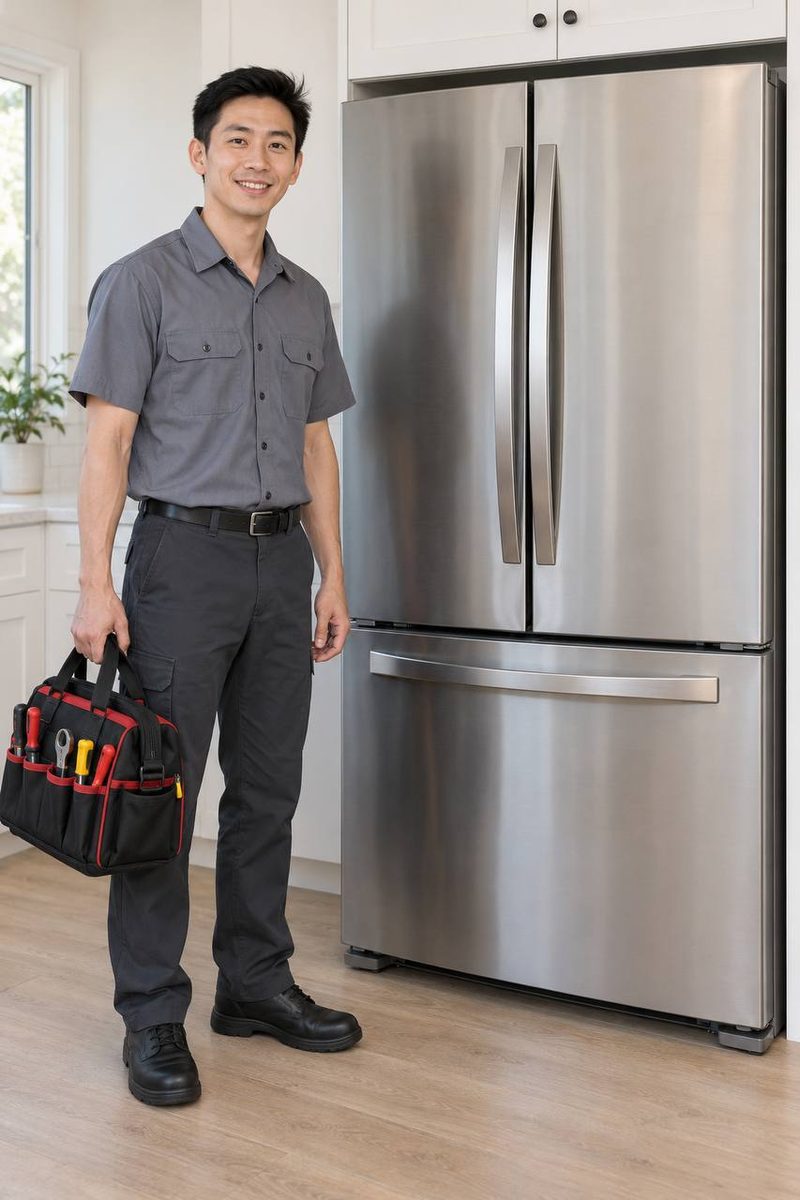
Refrigeration faults sort into three stories: defrost (frost colonizing places it shouldn't), airflow (one compartment cold while the other drifts warm), and the compressor's supporting cast — relays, capacitors, fans. The diagnostic runs those stories in order, because the order is what keeps a $259 problem from being misread as a $500 one.
Groceries put a clock on these calls, so refrigeration jumps our weekday queue. Sealed-system verdicts — a dead compressor, a refrigerant leak — get delivered straight at the $95 stage, before real money moves; everything else gets a written all-in price and, in most cases, a fix the same visit.
Pull the freezer's back panel on a fridge-warm-freezer-cold unit and the evaporator usually wears a frost sculpture. Its shape names the culprit — heater, defrost thermostat, or control. We thaw the coil with steam rather than chisels, replace the convicted component, then force a defrost cycle and watch current draw to prove the fix. The vents reopen, the fresh-food side comes back, and the sculpture doesn't return.
The evaporator fan pushes cold to the fresh-food side; the condenser fan keeps the compressor from cooking itself. One fails with a squeal behind the freezer wall, the other with a warm cabinet and marathon run times. Both are on-the-van repairs, and both visits include cleaning the coil the fan serves — a fan that died young usually worked next to a dirty coil.
A rhythmic click from the back is the start relay muffing the compressor's launch — and each muffed launch warms the windings a bit more. Caught this week, it's a bottom-of-range repair; ignored for a month, the compressor itself may pay the bill. Winding tests before and after the swap so the 'save' is verified, not assumed.
Water under the crispers is a frozen defrost drain; water on the kitchen floor is a valve, a fill line, or the filter housing. We trace the path end to end and fix the cause, not the symptom — a thawed drain gets its heat path corrected so it stays open, and a weeping valve gets replaced before it graduates to a burst line. Garage units get an honest environment check too; Tri-Cities garages are hard on refrigeration.
Form or phone — the code on the display, or just what the machine is doing.
A weekday window, van loaded for your model's usual suspects.
Diagnostic, labor and parts in a single number before work starts.
Most jobs close the same visit, and the warranty is in writing.
Sealed and full, a fridge holds safe temperature for about four hours, a full freezer for a day or two. Keep doors shut, move critical items to a cooler with ice, and tell us it's a no-cool call when you book — those get priority routing on weekday mornings, usually inside the safe window.
On a premium built-in or a unit still under sealed-system warranty, sometimes. On a standard kitchen fridge pushing ten years, the part plus certified refrigerant work usually crosses the replace-it line, and we say so at the $95 stage. You get the verdict before the spend — that's the whole design of our pricing.
Yes, and usually a friendlier one: a stuck damper, a drifted thermistor, or a control misreading temperature. It's diagnosed with the same instrumentation and typically prices near the from-figure. Bring up where in the cabinet things freeze — the location narrows the suspect list before we arrive.
All over the Tri-Cities, yes. Garage refrigerators fight summer heat and winter cold that kitchen units never see, and their relays, gaskets and fans age accordingly. We repair them where they stand and tell you honestly when a garage-rated unit would out-live another rescue.
Send the symptom or the code exactly as the display shows it. A weekday callback confirms your window, and the van loads for your machine before it leaves Kennewick.
The all-in price covers diagnosis, labor and parts. It doesn't move after work starts.
$95 for the visit and diagnosis is the whole bill — if the fix costs too much or the machine isn't worth it, that's all you owe.
Call (509) 841-9102 with the symptom or the code — weekday windows fill fast, same-week almost always holds.